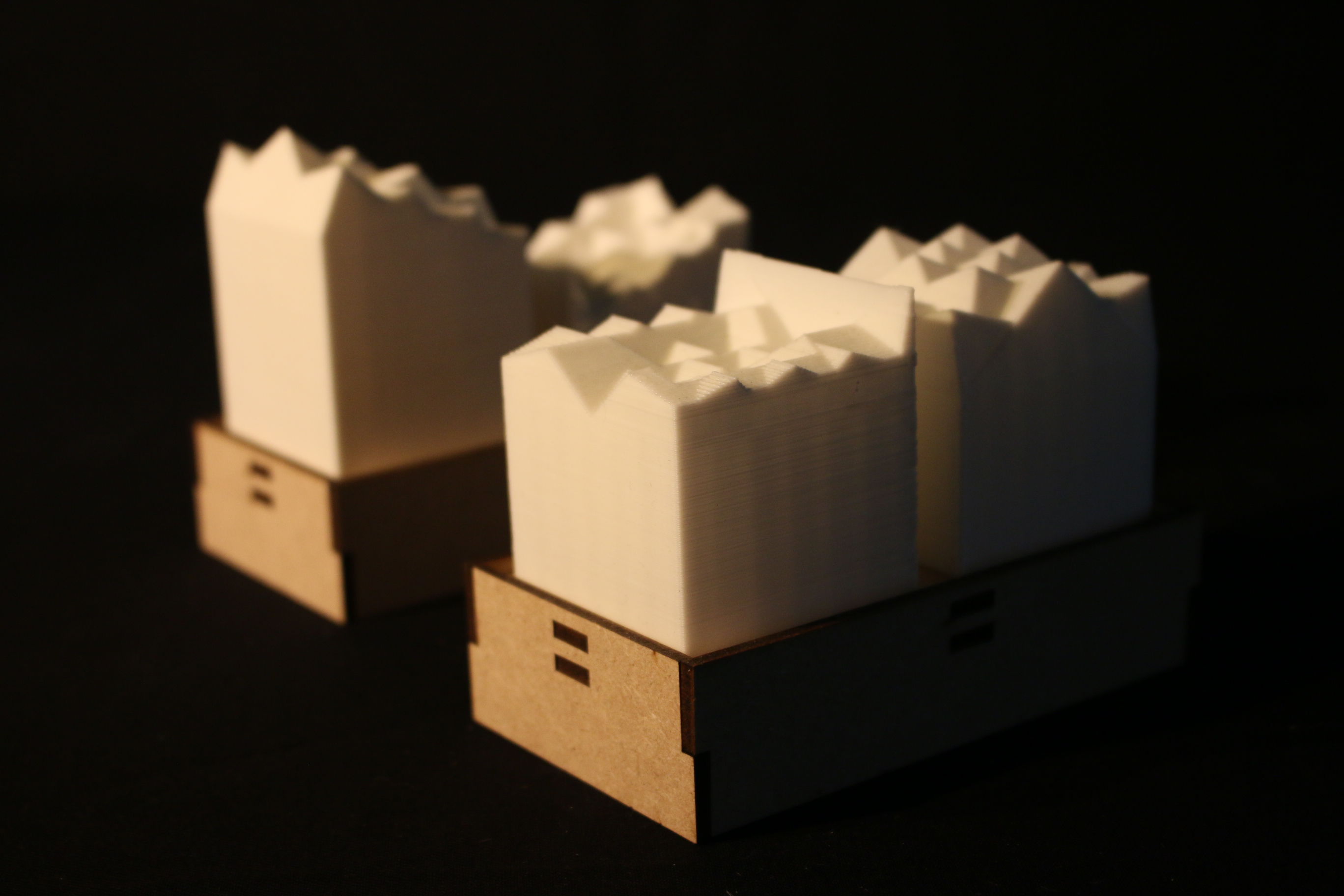
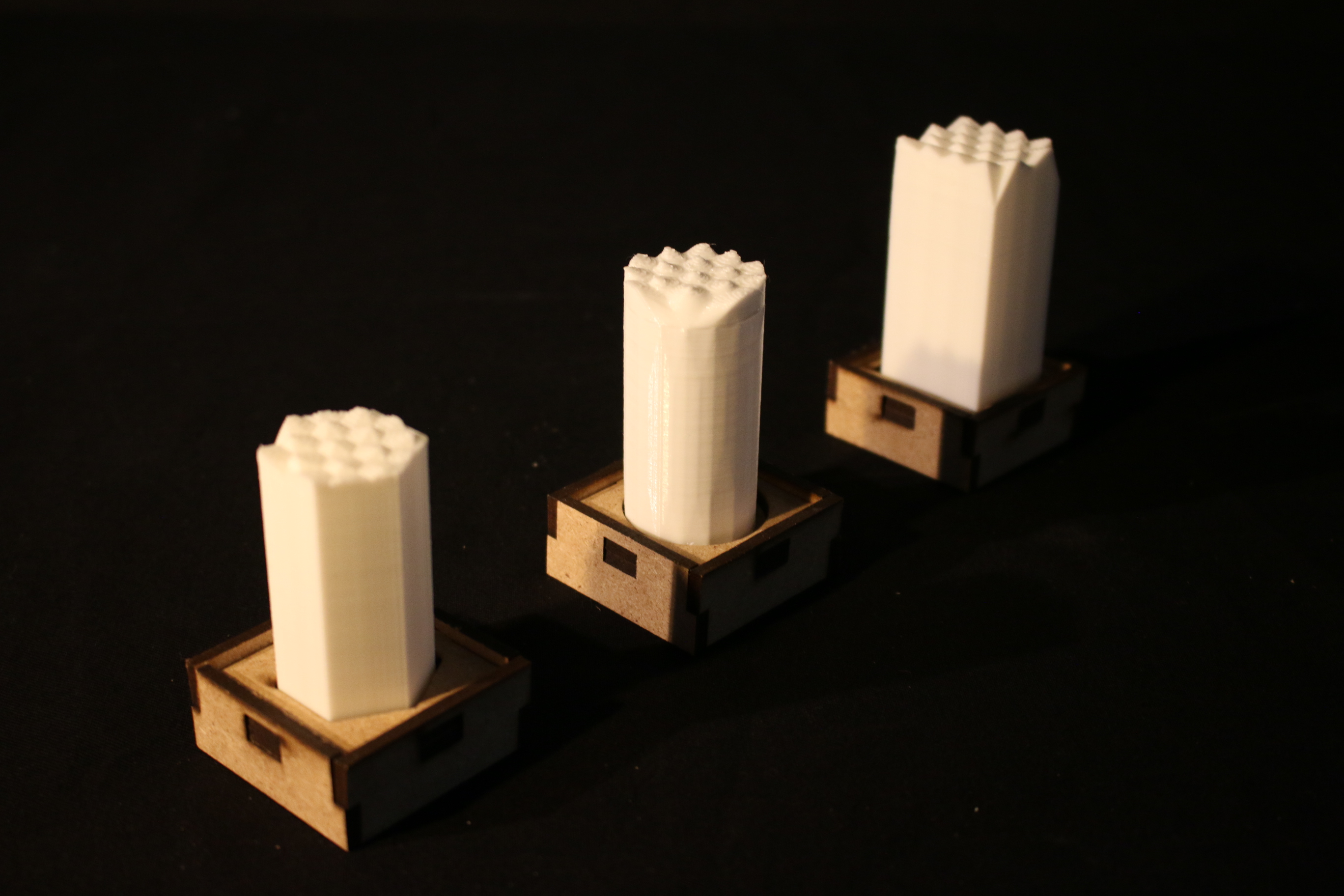
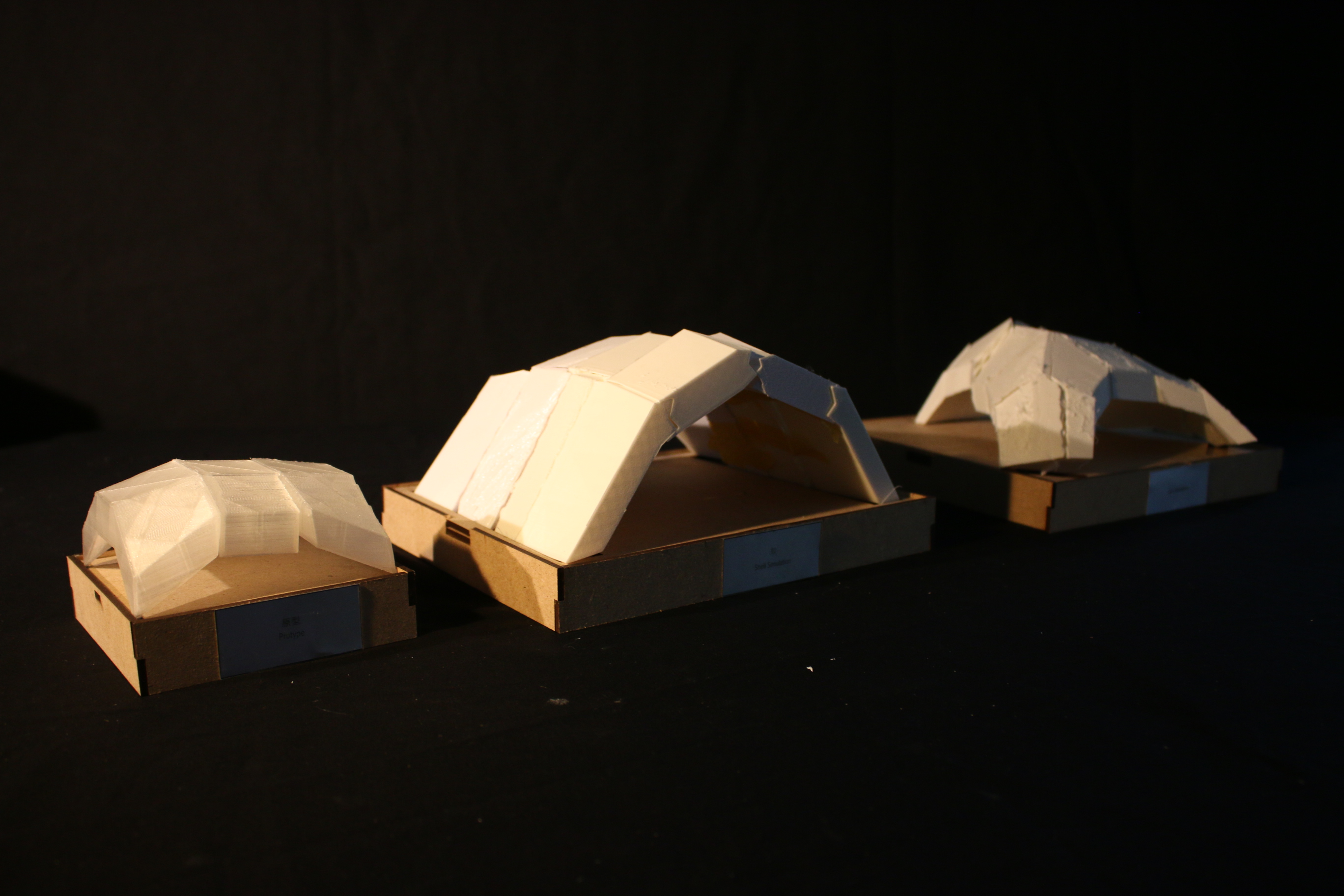
Biomimetic and Joint Surface Design
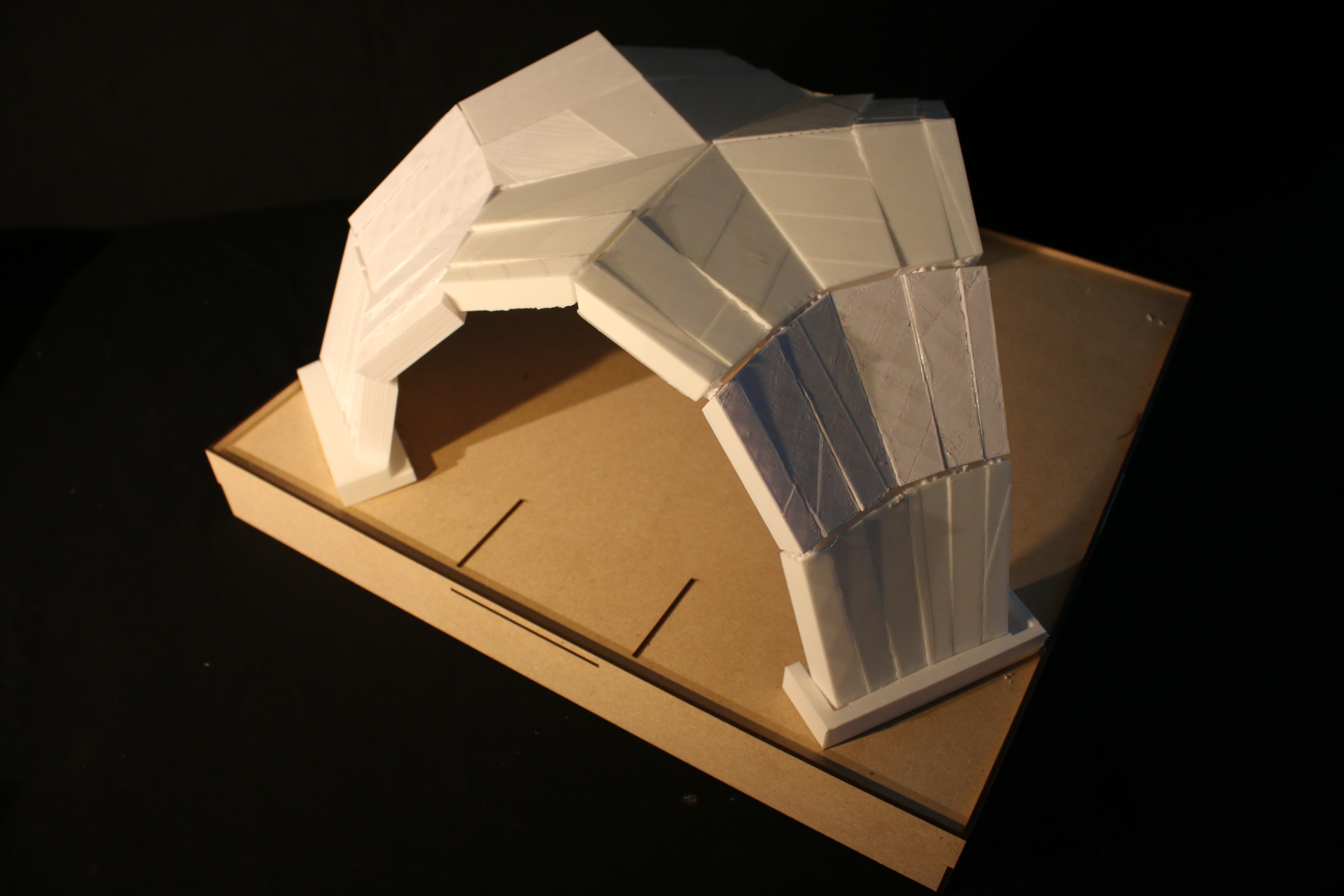
Inspired by the protective suture mechanisms of tortoise shells, this study develops a modular, quick-assembly interlocking system optimized through Grasshopper structural analysis. The design enables versatile form-finding, validated through a 1:10 scale physical model.
Design concept
Bio-inspired Design & System Optimization
Biological Inspiration: Drawing from the structural and protective mechanisms of crustaceans and scaled animals, this study focuses on tortoises and beetles. In particular, cross-sectional analysis of tortoise shells revealed a natural suture and locking mechanism that tightly joins individual plates together.
System Design: By replicating these natural shell seam geometries, a specialized joint interface was engineered. This interface forms the foundation for modular, quick-assembly structural units.
System Advantages: The interlocking unit design enables rapid assembly. Through physical and computational testing, the geometric profile of the joint interface was optimized to allow versatile form-finding across diverse structural configurations.
System Optimization & Validation: Using Grasshopper and structural analysis tools, both the units and joint interfaces were iteratively refined based on mechanical stress distribution. The system’s viability and multi-form assembly logic were validated through a 1:10 scale physical prototype.