Topology Interlocking X Robotic 3D Printing — Wall of Topology Interlocking
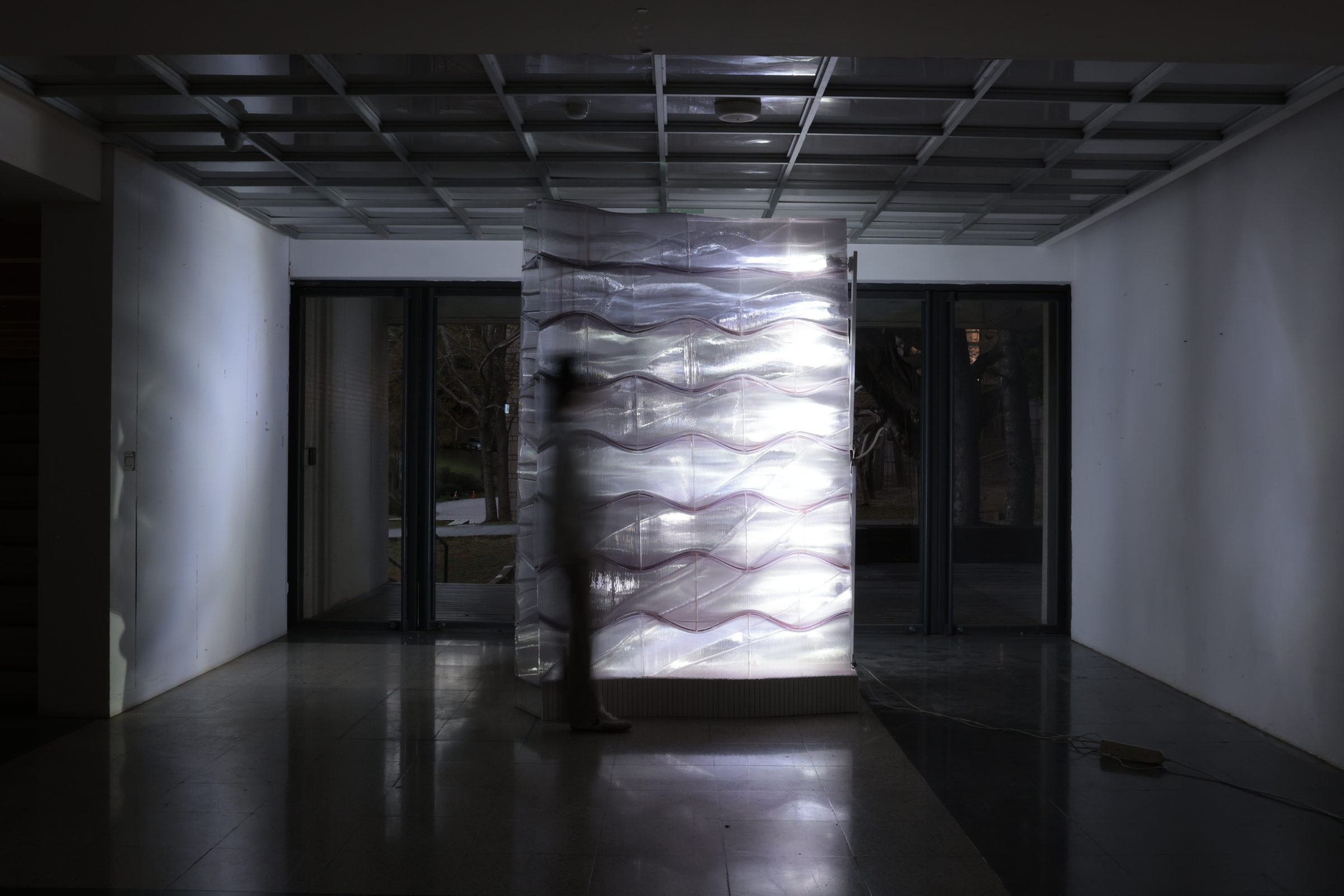
While large-scale, freeform surfaces often stretch the limits of standard 3D printing equipment, the technology excels in producing discrete, highly customized units.
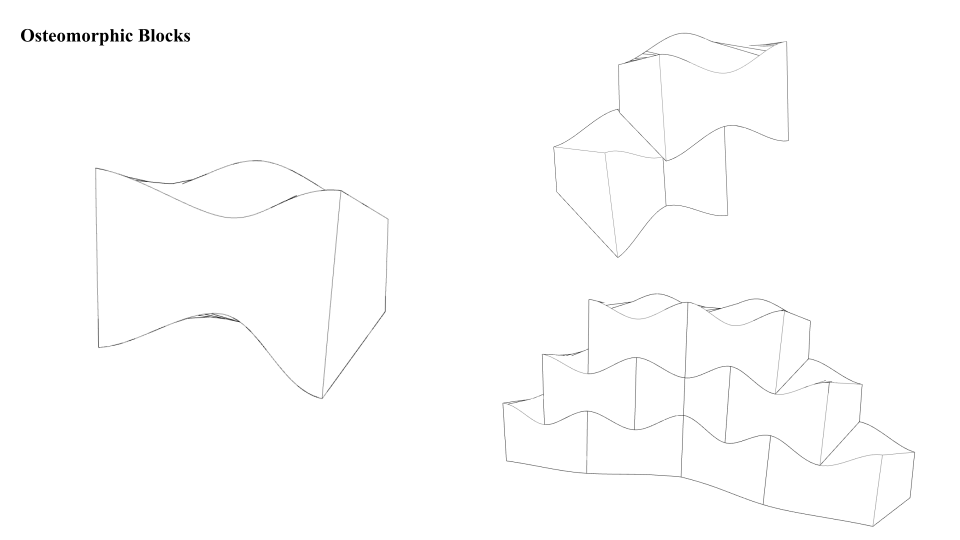
Drawing inspiration from ancient dry-stone polygonal masonry, this project leverages custom 3D-printed blocks to enhance structural stability while expanding geometric freedom.
By integrating robotic 3D printing with translucent PETG, the design redefines the interplay between form and material aesthetics—unlocking new architectural possibilities for structural transparency.
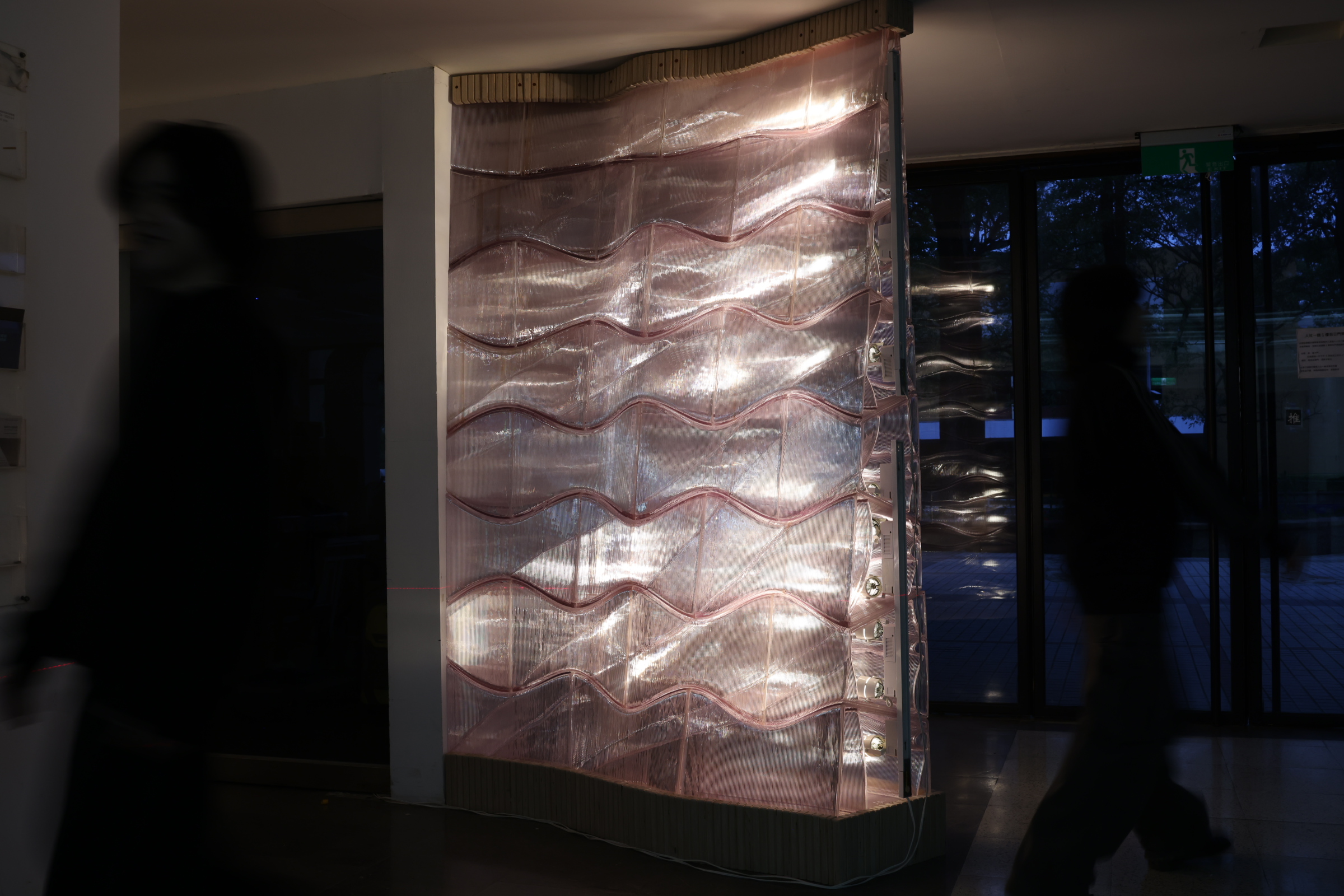

Design concept
Aiming to bridge the gap between digital design and physical manufacturing, this study establishes a highly adaptable automated construction system using a custom-built robotic 3D printing platform.
The research methodology focuses on three core aspects:
- System configurations for manufacturing precision
- Material experiments exploring light and shadow aesthetics
- Development of interlocking structures for dry assembly
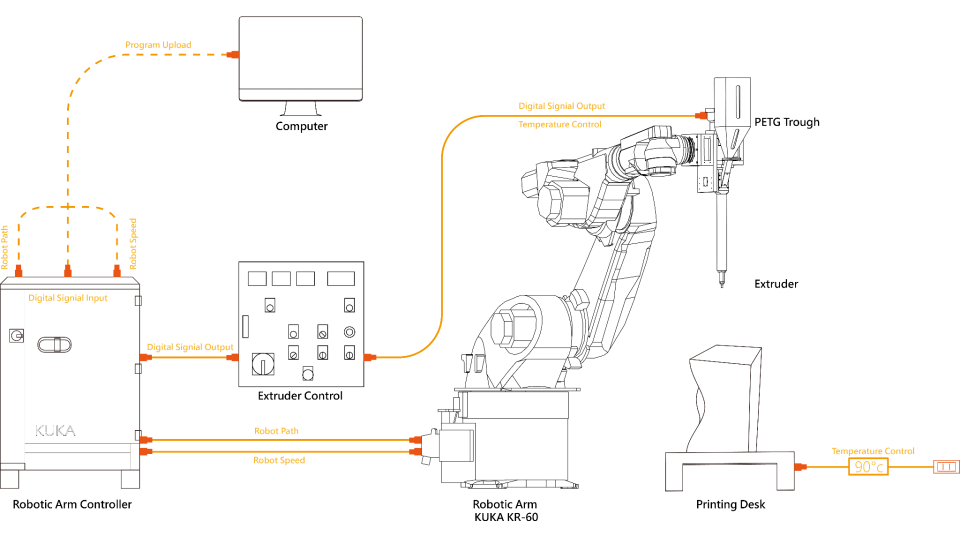
Making process
Unit Design: Osteomorphic Interlocking Blocks
- Geometry & Mechanism: Inspired by biological bone structures, the blocks feature non-planar, curved mating surfaces with smooth convex and concave contours.
- Structural Logic: Rather than relying on mortar, the blocks maintain structural integrity through geometric interlocking. Force is distributed across adjacent units, preventing individual block displacement and providing shear resistance under dynamic loads.
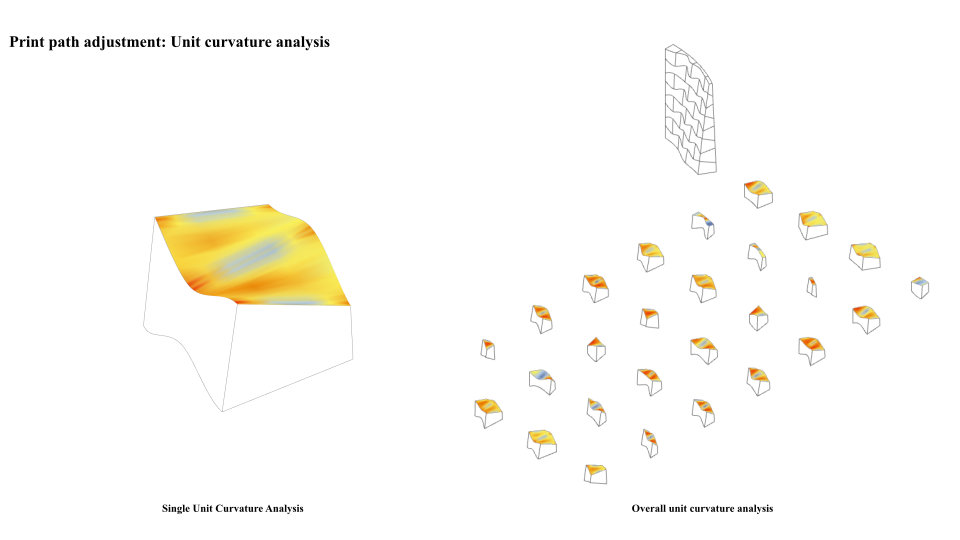
- Fabrication Advantage: The continuous, organic surface curvature naturally aligns with 3D printing non-planar toolpaths, allowing seamless continuous extrusion without harsh angular transitions.
Fabrication Process: Non-Planar Printing & Error Correction
1. Non-Planar Toolpath Optimization
- Curved Slicing: Toolpaths follow the surface curvature directly, eliminating the stair-stepping effect of flat slicing.
- Datum Accuracy: Preserves clean surface baselines to ensure precise alignment during interlocking assembly.
2. Overhang & Sagging Correction
- Issue: Steep overhangs caused molten PETG to sag and deform during early trials.
- Solution: Reduced localized overhang angles and decreased layer height in high-curvature zones. Finer layers cooled faster, offering better support and stopping sagging.